Friday, 30 September 2011

Captaining The Pinafore

2011 saw the commencement of my career as a director. For the first time, I got to see my ideas realised in full on stage, and with bountiful help from casts and crew alike I captained not one but two successful productions. This blog post has been in the works a long time and it is shameful that I let so much time elapse before writing it; looking back on the performance it is easy to forget the hassle, stress and hard work in the glory of reliving the moment, which is perhaps why we are fooled into doing these things again and again and again. The main aim of this post is to share with you the things I learned this year, through constant scrutiny of the management styles of other directors around me and over my illustrious maiden voyage as a Director.

As a side note, for more information on either of my shows, see Bette On Toast or Ralph Pocketwatch!

Here is me in action, directing like mad:


First, I learned that things get done best just by asking nicely. Whether it was asking for help, or getting a tour of the theatre, a polite word and a friendly smile goes a long way – it can be surprising what people are willing to help you with if you only ask!

Secondly, it’s not the costume you get, it’s how you wear it. Costumes can often be dull, ill-fitting, unflattering and sometimes even disgusting – but with the right attitude, regardless of your shape and size, you can make almost anything look good (from offstage anyway..!)

Things are NEVER as simple as you think. Getting three lines of people to bob alternately is a trick which is apparently profoundly difficult to master, regardless of how plain and simple it looks to the audience. Throwing something into the wings, sounds simple – will inevitably always go wrong when it matters. Most importantly perhaps – your friendly backstage curtains are easily manageable in rehearsal, but have a tendency to lure unsuspecting cast members into their exit-less depths when it matters most. Lesson: Always expect and accept that the simple things to be the ones that go wrong the most.

Time is incredibly important. It does sound like plain common sense to point this out, but this year I have personally seen countless hours wasted in indecision, and as a result of bad planning and time management. It seems one must always work on the assumption that there will not be enough time to cover everything so sacrifices will eventually be made, and that regardless of how good you are at making decisions, there are days when every single cast member needs to air their opinion about which hand to ‘finger click’ with.

I never realised until this summer how important it is to have a great warm up, and how rare it is to find a Music Director who can motivate a group of 40+ performers to wake up and feel energetic and enthusiastic. I deeply regret having not recorded all of the warm ups from The Mikado, and will endeavour to always strive to remember how fundamentally mood-altering an excellent warm up can be.

Character really is everything on stage. It sounds cliché and probably is, but as a performer, understanding and maintaining your character properly throughout a show is the effort that catches the audience’s eye. An excellent character can get away with almost anything on stage, be it spontaneous reactions, ad libbing or even mistakes as large as skipping half a scene – all can be forgiven and quite often go unnoticed in the face of a performer enjoying their character to the full.

Presumably, even in shows which don’t take place on boats, the value of being able to have “all hands on deck” is second to none. The process of setting up the stage for Buxton Pinafore was set to be one of the most trying of the experience (especially when it turned out the set didn’t exist anymore) but through team work and perseverance, we made an excellent job of it. From tying bunting to altering lights to setting up drum kits and even to buying tomorrows breakfast, everything happens much easier when everyone banded together for the effort.

When working with anyone and doing anything, at all, being patient is extremely important. The time that it is most important to be patient with your cast is under situations of extreme pressure; I discovered that though you yourself are so stressed you could pass out at any given minute, smiling and remaining (mostly) calm is the best way to encourage the faltering morale of any nervous cast. I am always grateful for a director being patient with me, and so I think it important to return the favour.

Something I learned the hard way this year is that you really can’t please everyone. Although there were no horrifically unexpected comments from audience members at any point, I was surprised to hear some of the critical points. As well as this, when directing I feel I personally suffer from the weakness of trying to please the whole cast, which leaves me tipping the artistic balance somewhat. I think in future it is important for me to remember that regardless of how much effort I put in to avoiding an unpleasant undercurrent, there is always someone at the end of it all still moaning. Better in future to put the effort into perfecting the show as a whole!

The most important thing I learned all year was about friendship. When you perform with someone under another director, you bond with that person quite uniquely. If you are also friends outside of this, I think it helps strengthen the relationship and imbue it with a sense of united success. If you place yourself then in the situation of directing your own friends, it is important to remember people’s limitations. Knowing what a person would cope with in an everyday situation does not constitute being able to press harder on them than others, nor should you rely on friendship to make recompense for such liberties. I personally find it hard to remember not to hold others too firmly to my exacting standards, and sometimes I think in the chaos of rehearsals we all forget that we are friends first and foremost, and performers only as a hobby. However, despite these tribulations, it cannot be denied though that for an amateur performer, there are few finer pleasures than being able to perform an excellent show to a full audience alongside some of the people we love and respect most in the world. On this note I leave you, with the thought that the biggest thing I have learned this year is definitely how lucky I am to have such patient, brilliant and talented friends to tread the boards with, and to help me cut my directorial teeth with such success.

Here is us, celebrating our success on a tiny train:

Tuesday, 26 July 2011

Do choruses yield little consolation?

Saturday will see a rather momentous occasion in my life, as I will take up rehearsals for a show as chorus, without a leading role. Now, that sounds like I could be bordering in being a little vain; I did, of course, start my performing career in the chorus - I simply mean to say that it feels like so very long ago, because of how much life has changed since. I think the last show which I was chorus in was Iolanthe, aged 16, in 2004, in which I also understudied (if you can believe that girls catholic schools have such a facility) Private Willis. I suppose really when you consider I am now only 23, it doesn’t seem all that long a time. In years perhaps it is not, but in shows, it seems many.

I have been contemplating how to enjoy being in a chorus. Again, this sounds very vain, but I mean it in a positive way – when I was in the chorus at school I had a lot of fun, but when I moved onto principal roles, I suffered a lot of stress because my voice was very young and undeveloped, causing cracking and general embarrassment. Actually, the cracking problem is one I have only solved since late last year, but it became less of an issue past school age. Anyway, I seem to have memories of dressing up and being part of staging something, feeling included but being able to sit back and enjoy parts of the show at the same time. I wonder if being in the chorus for a show is generally considered relaxing? Having a solo role is certainly not relaxing. Should you have a small role, you spend your entire rehearsal period worrying about messing up your few lines with no chance to redeem yourself, and should you have a large one, you are presented with much more importance and exposure in which to potentially mess up numerous times. Being in the chorus, I imagine you feel some amount of pressure to keep the group standard up, but largely, the old saying of ‘safety in numbers’ must mean a whole lot of weight off one’s mind.

One thing that does concern me about my chorus adventures in the coming weeks though is my natural inability to remain unseen. I literally cannot bear to see areas of stage under used or directions unfollowed, and so I find myself (in the recent times I have doubled as chorus) naturally appearing at the forefront of the action, generally to try and lead. At a curvy 5ft 9in with bright ginger hair, it really isn’t hard to be seen anyway, so why my natural instinct feels it necessary to prompt me thus ways is rather odd. Perhaps it is merely that, without direction otherwise, I am an unintentional chorus ham. I suppose that is one theory I can put to the test!

Genuinely though, I am sure there will be moments of fleeting irritation, jealousy or disappointment through rehearsals in which I should very much like to have been singing a solo role; I presume this is something which bothers many performers, usually soloists, who find they do not fit the bill for a specific show but continue, undeterred, to be involed. One of the best things about the SavoyNet shows seems to be that almost everyone involved is of an exceptionally high standard, with almost all voices well able to hold a principal line if necessary. It is a pleasure to be able to sing with so many excellent singers, and I hope that this year I will be able to spend more time getting to know the people behind them and making friends, rather than focusing on line-learning and exacting dances. I look forward with anticipation to my experiences over the next few weeks and will most certainly be reporting back about how I find it.

Wednesday, 20 July 2011

Harry Potter's Final Filmic Installment

Harry Potter And The Deathly Hallows: Part 2
20 July 2011

The final filmic chapter in the Harry Potter series is significantly less disappointing than its predecessor. There continue to be a number of scenes written specifically for the film version, and many deviations from the flowing plot line of the book, but the viewer is less inclined to notice and indeed can look favourably on the embellishments for certain characters (Matthew Lewis’ homely hero Neville Longbottom, for example). The film balances story telling and resolution with heavy amounts of magical action, and though at times the balance is a little skewed, the overall effect is fantastical. Emma Watson’s Hermione continues to be mildly irritating but Daniel Radcliffe’s all too wooden portrayal of Potter is less offensive than in previous years, and Rupert Grint (Ron Weasley) simply never fails to please. Disappointing perhaps was the use of some of the older stars of the piece – Robbie Coltrane, Emma Thompson, Jim Broadbent and even Julie Walters are given an extremely meagre portion of the action. As well as this, the film skirts over the emotional capacity of the deaths of some of the popular characters in favour of more flash bang action.
Overall, the film really is a must for anyone familiar with Potter. Fans of the books may be slightly disgruntled at the editing and invention of the final instalment, but it is a valiant swan song from the Potter cast and crew. How it fares in 3D remains to be seen, but the old fashioned 2D version was most acceptable.

Continuation!

It has been some time since I published any sort of review. In the spirit of 'getting back into' academic writing in time for October and an upcoming MA, I have decided to make a special effort to resume these reviews. However, in order to sustain interest and personal challenge, and to reduce waffling, I intend to limit these reviews to 250 words or thereabouts. Here goes!
K

Sunday, 5 June 2011

A little list of Gilbert and Sullivan exploits!

Roll up Roll up, Ladies and Gentlemen, Attention Please Attention if you please! I present you with my G&S history, in pictures!

The Yeoman Of The Guard – 2002

In 2001 I helped out with Pirates, but that was before the invention of cameras. 2002 saw me take to The Boards for the first time ever, as a Yeoman – Not only was I considered too tall to be a girl, but the tall girls were split, with the taller half being Yeoman and the middle half being men. Shy and quiet and largely unable to sing, Yeoman was certainly a new experience, but remains one of my favourites. For anyone interested, the school reinstated ‘Laughing Boy’ and ‘Jealous Torments’ but retained the cut of ‘Rapture Rapture’ – which I for one am only too grateful for. See how many other familiar faces you can find on this cast photo:


The Mikado – 2003

Slightly older and slightly less shy, in The Mikado I was male chorus, had two wives, and carried a banner as part of the Mikado’s train. Start small, as they say. Digital cameras had been invented by then, so here is me sporting full Japanese attire, and yes, those are tights on my head.


Iolanthe – 2004

In Iolanthe I was the tallest person in the cast, and as some sort of bizarre reward for this achievement, was the only member of the Peer’s chorus in blue, thus identified easily from miles away. Intriguing costuming decisions saw us wearing white bloomers with shirts tucked in, and personal pride rendered my mustachios the largest and most impressive around. I even took public transport home while wearing it. That, ladies and gentlemen, is style.


Ruddigore – 2005

My first principal part. For those of you familiar with the story, Old Adam is a great little part for a character actor and was a good part for me to get started on. Racked with nerves, I made mistakes with the singing every night, but thoroughly enjoyed the experience. Especially getting my costume ripped on stage, and terrorising the female chorus with a stuffed rat, and fake-crying really loud during the leading lady’s solemn second act solo. I also got measured for my costume standing on a chair in the headmistress’ office in the middle of one of her important meetings, having spent all afternoon in the pub. Ruddigore also saw the start of that infamous school nick name – ‘ugly old moron’ – those were the days.


The Gondoliers - 2006

My last year in school was emotional for many reasons, but none more so than that I was forced to leave the comforting grasp of the Opera. Playing Don Alhambra was fantastic, Gilbert did, after all, write his finest roles for men, and not many women can boast of having played them. Several large solos and countless libretto lines later, on the last night I was so distraught at the prospect of leaving that I cried all the way through the final scene, and positively collapsed after the customary last night speech. Which was a shame really, as I had been partly responsible for re-writing the end-of-show song that year and didn’t get to enjoy any of it! (I will endeavour to find and replicate said song one day). Here I am, gloriously grey:


HMS Pinafore – 2007

The established G&S society was one of the reasons I decided to go to Hull University, and I was lucky enough in my first year to secure a good part with a promising young cast around me – the HUGSS society enjoyed a large influx of members in 06/07, among them a full suite of G&S principal performers – soprano, alto, tenor, baritone, comic lead, bass - meaning that Pinafore, although raw in presentation, allowed performers good creative flow, and set the foundations for lasting friendships. Here is me, resplendent in my first ever female role:


Iolanthe - 2008

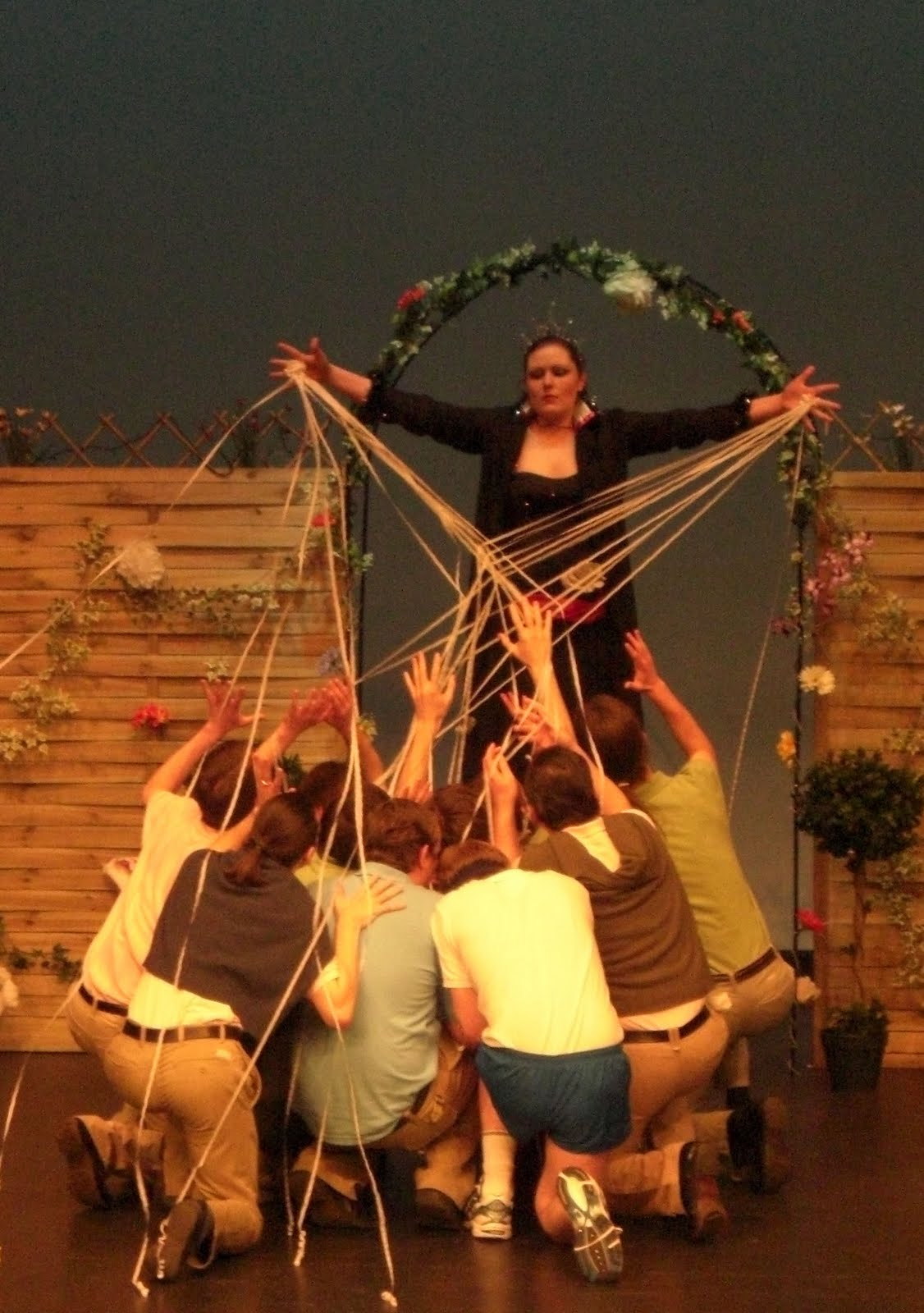
My second Iolanthe, this time as a principal. Fairy Queen Kayleigh was also President Kayleigh, aptly termed by the director in his ‘Thank You’ card after the show ‘Lord High Everything Else’. I got involved with everything possible and probably largely compromised my final degree grades by throwing myself into the part with such ardour. Nice costume this year, a little bit sexy is a good look for the Queen I think. My favourite bit of the show was almost definitely being given japanese ‘kabuki’ streamers to play with at the end of Finale Act 1 – amazing!


The Pirates of Penzance – 2009

My first role in Pirates, and not an attractive one – directorial vision saw Ruth in men’s clothing, having obviously worn out her female attire while living with the pirates. The overall effect was brilliant, with all the pirates in tweed - but I doubt I will ever have a less attractive costume! The show was largely set in the 50’s with swing skirts, beach huts, bright colours and my little brother playing the (Geordie) Sergeant of Police. We also won the ‘Best Society Event’ award from the University for our efforts! Two pictures here, to show you my rather hideous main costume, and also my make-over costume for the end of the finale:


The Mikado – 2010

After being forced to leave University (bad times indeed) I reluctantly sought G&S action elsewhere – and became a member of St Andrew’s in Roker. The Mikado was the first time I had ever played a ‘young’ girl, which I found ridiculously hard to adjust to – and the show run was the longest I had done to date (6 nights including Dress). Playing Pitti-Sing was also the first time I had acted with appropriate aged principals; the three maids and Nanki-Poo were passing young enough, and the other characters were passing old enough to be real adults. Overall a brilliant experience, which also set my directorial ambitions in motion.


The Gondoliers – 2010

Words cannot describe how simply amazing my experience at Buxton was. Invited to Buxton with SavoyNet Performing Group to sing in the Opera House, ‘Tessa’ was my biggest and most difficult role to date, having to take on the ‘romantic’ leading lady for the first time ever. I couldn’t have asked for a better Guiseppe, more enjoyable rehearsals or a fuller Opera House (sold out!). Audience members actually cried in the emotional exit of Marco and Guiseppe at the End of Act One, and I discovered that actually I can dance quite well!


Ruddigore – 2010

The oldest role I have played to date, Dame Hannah is clarified from the off as an ‘old’ character, so I found it quite difficult to effect this, being barely twenty two. Still, I gave it a good go, donning prematurely greying (but visibly still red underneath) matron hair, wrinkles and a stern Scottish accent. High point of this one – being dragged through the audience with a sack over my head, screaming!


Iolanthe – 2011

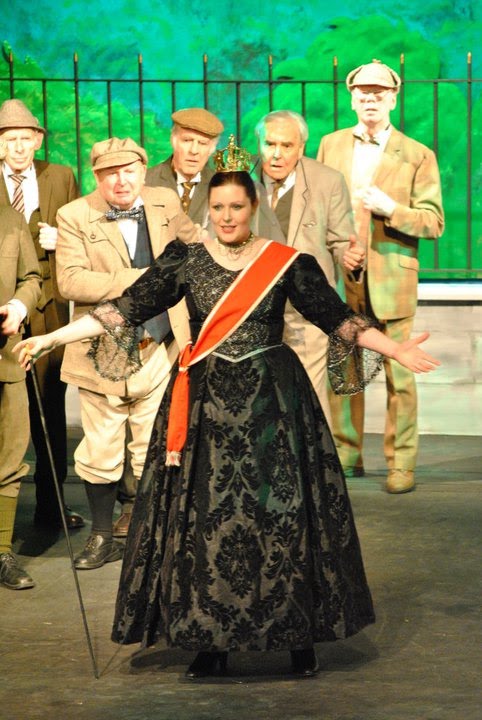
My second role with Roker, my second Fairy Queen and my third Iolanthe – I definitely knew all the words this time. My Fairy Queen this time took a much more childish direction, channelling ‘Queenie’ from Blackadder, as she led the Suffragettes to victory (enjoyable insertion: The Soldiers Of Our Queen from Patience, but to the words ‘We are the Suffragettes/We fight for equal status’). I had the most amazing costume I have ever encountered and was absolutely devastated to have to give back, and enjoyed building on friendships formed during Ruddigore. Here is me, commanding the stage, as it were!


The Grand Duke – 2011

Every G&S collector needs a ‘Grand Duke’ under their belt and I was lucky enough to be invited to become a member of Newcastle University G&S for the privilege. Working with students again was absolutely brilliant, and The Grand Duke presented opportunity to get involved with makeup and costumes again, as well as making lots of lovely new friends. Baroness von Krackenfeldt is amazing fun to play (especially in this interpretation) – highly strung and thrifty in Act One with Rudolph, angry and haughty in the fantastic Act 2 entrance with Ludwig and Julia, and in this, the opportunity to be a delightful drunk, throwing glasses of champagne over an unlucky chorus before marrying the strapping Prince of Monte Carlo. Theatrical Bliss!


HMS Pinafore – 2011

Yet to reveal the finished spectacle, I wont go into too much detail about Pinafore – but a full account of my first directorial project will no doubt follow. Directing is fun despite the stress, and playing my own Buttercup gives a sense of freedom which I haven’t encountered in anyone else’s theatrical vision. That, and I get to stand in for anyone who is currently missing, so a myriad of characters is always eager to get out! Here is me being Sir Joseph Porter in rehearsal:


And that, devoted readers, is that! More information on any of the above is available on request should you ever want it (unlikely) but I leave you now to attend to Pinafore business. One day I might even branch out to performances which aren’t G&S, though still high on the ‘To Do’ list are Phoebe in Yeoman, Lady Psyche in Ida, Lady Jane in Patience and one of the twins in Utopia. But anyway, to business - I go, I go – look how I go! Swifter than an arrow….

Monday, 28 March 2011

Hundreds of amateurs, half empty audiences - why?

The north-east amateur dramatic scene is always busy, as I am sure it is in other areas of the country. However, every society out there has been standing on the stage facing a half-empty audience at some point in their theatre career. It did previously strike me as very odd that the musical dramatic types didn’t band together and help each other out now and again to create allies and a fall-back support net; after two years of experience, this has become mildly infuriating.

All societies are always looking for male members. Always. Bar none. They are quite often also always looking for YOUNG members. Now, within the confines of the Gilbert and Sullivan Societies of the North East at least (though I am sure it applies to a good many others), why cannot the major societies get together sometimes and discuss their show and rehearsal dates? If they could swallow their competitive pride enough for this to happen, we might actually get somewhere. Performances being spaced out around the calendar, without clashing rehearsals, would give anyone who wanted to be involved with more than one society the time to do so without ruining their own lives with incessant rehearsal, thus sharing out the male/young talent pool and preventing the stagnation of unsuitable performers. I am already sufficiently jaded enough to know that this will never happen. But it is nice to consider the possibilities.

The biggest issue I find within the NE societies is support (or lack thereof) for each other’s performances. While at University the creative groups supported each other without much encouragement; the fierce competition between the societies and departments was suspended temporarily in a movement of support and curiosity, resulting in a full audience for those playing. Even if all it meant was that you, the audience member, could be justified in belittling the dramatic efforts of a rival, because you had paid, sat through the show, and earned your opinion. In the NE creative groups might have one or two links with other societies, but by and large will have absolutely nothing to do with one another. Now this is very unfair. Numerous times I have sat through performances which were absolutely piteously ridiculous, in the name of ‘local support’ – but where are the members of their society when the curtain goes up on our shows? Did the local groups ever support one another? This anti-support movement must have started with someone similar minded to myself wondering why they bothered themselves to stew in the cringe worthy boredom of local society events for no return, and giving cause to an uprising against it. Or perhaps way back when these groups were formed it was forbidden to fraternise. Who knows. Perhaps in future I will withhold my support for those who I feel would benefit from it; but how would I ever know who was worth supporting if I didn’t attend the shows?!

Don’t get me wrong, support between some of the G&S groups is quite consistent through the concentrated efforts of some individuals, but between the G&S groups and most of the more mainstream Musicals Groups, virtually nothing exists. The least these people who consider themselves to be at the top of the am-dram/musical food chain could do is ‘Maybe’ attend rather than ‘Not’ attend on Facebook. I mean come on. We all know you are too puffed up with your own self importance to sink to the level of actually coming, but it wouldn’t cost you anything to pretend.

Rant over.

For today at least :)

Thursday, 3 February 2011

Temporary Pauses

Quite, quite often, I forget about this blog. I have seen many many shows since the last one and have forgotten to create anything about them. How irritating. Perhaps from now on I might remember, and even once of twice publish retrospectively...just in case the mood strikes anyone to read it :)

Monday, 8 March 2010

Singing Choruses in Public - Its G&S I think!

Hull University Gilbert and Sullivan Society have, for the last few years, prided themselves on being able to produce energetic, enthusiastic and enjoyable versions of the G&S Operettas with a different twist to each rendition. In the eagerly anticipated Tim Burton style production of Ruddigore, the cast of 2009/2010 have certainly not dropped the ball.

Ruddigore is Gilbert’s satire of Victorian Melodrama, and the gothic elements in the plot (witches, curses, dead ancestors) make a good marriage with Tim Burton’s dark, dingy style. Director Lucy Thomson-Smith excelled herself in bringing a large and diverse cast into line with this vision, resulting in an entertaining and light hearted production.

The set for Act I of Ruddigore tore away from the usual Cornish Village to see the characters in a minimalist, monotone space, not dissimilar to the empty village in Burton’s The Corpse Bride. Resplendent in pale rags, the female chorus worked well as an eerie unit, and in their contrasting rich black the male chorus more than compensated for their lack in number with their enthusiasm and ability. Of the capable principle line-up, Lisa McKinley’s crazed and flirtatious Zorah was always a pleasure to watch. Fiona Murray’s Mad Margaret defied some of the traditional stigma of the part by being identifiable; her madness was reasonable within her story and made the audience laugh without having to resort to pure absurdity. HUGSS veteran Rory Oliver’s booming entrance in Act II grabbed audience attention, well supported by the male chorus and fantastic life-size paintings of the Ruddigore ancestors.

Thomson-Smith’s direction was carried well by the cast; perhaps not to the tastes of a die-hard G&S traditionalist but carefully striking the balance between maintaining the integrity of Gilbert’s original intentions and bringing to life an exaggerated element of character and setting. Her direction for the usually dull penultimate number (‘There grew a little flower/Sing hey lack-a-day’) was beautifully sad, marrying Oliver’s strong bass with Rose Kirven’s sweetly emotional contralto to a poignant dance sequence. At several points the audience lost interest in the main action of the lead characters in favour of a humorous background interlude, which could be seen by some as a weakness – but when evaluating audience enjoyment versus audience understanding, G&S quite often proves too tangled for the latter and so here the former is a welcome relief.

Amateur productions are often hampered by a lack of financial resource or a very wooden and stuffy approach, but congratulations must be duly awarded to cast, committee and orchestra alike for an enjoyable evening, showcasing some genuine talent in many of the young performers, and bringing Gilbert’s ghosts and some of Sullivan’s most dramatic music alive once more.

Sunday, 23 August 2009

A Facebook Don't

FACEBOOK THE MUSICAL
Edinburgh Fringe Festival 09
www.facebookthemusical.com

One could be forgiven for thinking that Facebook: The Musical would be about Facebook, that it would be a clever and insightful idea given Facebook’s current popularity, and that it would be an interesting show. Sadly, it did not quite fit this bill, due to falling far short of the marker.

Starting with a relay of ‘status updates’ about the five different characters to set the scene, the action did not take long to get going, but it was soon clear that the story didn’t have a lot of relevance to Facebook. In fact, it was almost possible to omit Facebook entirely from the show, and do it no real damage. The show was over long and tedious in places, and there was little real wit involved in the writing. More than one audience member resented paying £9.50 to be exposed to a plot which, though mildly interesting some of the time, was not the clever comedy the Fringe Programme seems to promise.

Despite the rapid deterioration of the Facebook element within the play, one could not truly declare the show to be a waste of time, and this merit entirely rests on the shoulders of the young cast. All five performers were accomplished actors and did amazingly well to maintain dwindling audience interest in the face of the rather shambolic plot. In particular, lead female ‘Rose’ and secondary female ‘Patience’ were both brilliant performers with very good vocal ability. The direction was executed well in places with some good ideas, and aside from the copious amount of samey ballads, the music was really very good, and suitably well received.

For an idea with such potential, it is a shame indeed that the Facebook part of the plot was merely a playground of concepts, with no real continuity. One might hope that the actors showcased here might look for a better outlet in next year’s Fringe, in order for their talents to thrive rather than be stifled, and perhaps a rewrite of the play would be beneficial.

Big Band make a Big Impression

SWING IN THE CITY
Hull University Big Band
Edinburgh Fringe Festival 09
City Nightclub

Hull University Big Band have played at the Fringe for six years, and judging by their current success, continue to grow in popularity.

For the last three years at least H.U. Big Band have certainly upped the game, increasing audience and refining band talent, which produced a very entertaining gig indeed on Saturday August 15th. The musicians were full of energy and enthusiasm, and most were quite often ‘bopping along’ to the infectious tunes. All soloists impressed the audience with their ability, particularly drummer Dan England and sax player Matthew Newby. Both singers (Alex Haigh and Gemma Cross) were on top form - the rendition of ‘Bad, bad, Leroy Brown’ certainly had the crowd going. The set of famous favourites went down tremendously well, including old time classics like ‘In The Mood’ and ‘The Chicken’. The cheesy-yet-enjoyable highlight of the evening occurred in the pen-ultimate performance; during the sparkling rendition of ‘New York, New York’, the glitter disco ball was brilliantly lit right at the last chorus for a timeless big finish.

Congratulations to all involved, Hull University Big Band should be able to enjoy many more years service in the Fringe Festival if this particular ‘Swing in the City’ Gig is anything to go by.

Peak Opera sigh for the love of Buxton

THE YEOMEN OF THE GUARD
Peak Opera
19th August 2009
Buxton Opera House

Peak Opera’s production of The Yeomen of the Guard was eagerly anticipated within the Buxton Festival camp. The show is a favourite of many, so Peak were under rather a lot of pressure when mounting their annual performance this year.

With any amateur production the audience must be willing to factor difficulties and restricted rehearsal time into their view of the show, and though Peak did well within their amateur confines, in the case of the chorus one could not help but feel even one extra day rehearsal of musical confidence would not have gone a miss. However, despite the odd worrying tendency to wander from Sullivan’s desired timing, the chorus did well to fill the stage with enthusiasm, and the Music Director was quick to reign the few musical discrepancies back in. Vocally the chorus were a little unbalanced, with a heavy tenor and soprano presence, but their acting efforts were well received.

The show went off well, sticking largely to the more traditional direction of G&S but slipping in new bits of business, which were (on the whole) easily detected and then largely accepted by the eagle-eyed audience. The direction was perhaps a little static in places, but was generally well executed and sometimes pleasingly effective, such as the sexual capers in ‘Were I Thy Bride’ and the quaint bunting-frilled dance to ‘Heighdy’.

The principal line-up was strong; a charismatic Phoebe (Lucy Appleyard) and an oddly likeable Shadbolt (Gareth Edwards) were well partnered, both demonstrating good vocal ability and delivering confident and enjoyable performances. David Lovell’s Sergeant Meryll was a kindlier version than sometimes found, who sported an impressive yeomanly beard, though not as intriguing as the beard sported by Kimmo Eriksson when he wasn’t playing Leonard Meryll. Angela Lowe provided a Dame Caruthers who was formidable in her way, but not entirely unlike able; whether deliberately or not, she gave the character an interesting dimension of slight nervousness in her over active arm movements. Elsie Maynard (Alexandra Saunders) was vocally pleasing, but a little less animated than she could have been; this had the interesting effect of complimenting Chris Diffey’s enthusiastic Fairfax, but faced with Jack Point’s avid devotion, seemed to hint at a bored acquiescence to their match on Elsie’s part. Liam Geoghegan played Point straight and with enough merry wit to warrant the Joker’s profession, but his aptitude lay in the very humane portrayal of Point as a man suffering the pangs of unrequited love; he coped well with the inherent difficulties of playing a character who must bounce from the one extreme to it’s opposite. The handful of smaller principal parts were equally well played; no actor could be targeted as a weak link.

The set was effective and the ambiguity of its doorways could be forgiven in the face of their ability to traffic large numbers. The use of traditional costume was good, especially for Point, Phoebe and the Yeomen, though one or two costuming decisions were a trifle dubious. The cast as a whole could not be faulted on their enthusiasm or effort, and looked to be enjoying themselves.

The most memorable part of the show was undoubtedly the rather controversial decision to have Point assassinated. The audience might indeed have been unsure what to make of it, but it was certainly a shocking ending and brave decision, the sadness of which left more than one member of the audience significantly moved.
Peak Opera delivered an enjoyable performance, which housed some genuine talent.

Friday, 24 July 2009

You've Got To Pick A Celebrity Or Two!

Cameron Mackintosh's 'Oliver!'
Drury Lane Theatre, London
Thurs 16th July 09


Rowan Atkinson’s role as Fagin was highly anticipated from the off. The audience on the 16th July at Drury Lane were certainly keen for Atkinson’s arrival; a hearty round of applause directly followed the actors opening line. London loves a celebrity novelty.

While Atkinson was more than adequate as Fagin, he didn’t rejuvenate the role as much as he certainly could have; his delivery was a confusion of Ron Moody’s Fagin (19XX film version) and Atkinson’s infamous character creation ‘Mr Bean’. However, his natural flair for comedic timing enabled the talented young cast to bounce easily from him, and despite an entertaining rendition of ‘You’ve got to Pick a Pocket’, the audience was left with the impression that Atkinson was not cast on the virtues of his singing voice.

The show was as entertaining and colourful an evening as a top West End Show should be. The cast breezed through the brash chorus numbers, and the majority of the company could not be faulted for their efforts. Tamsin Carroll played the role of Nancy, and her dubious rendition of the climax of Nancy’s ballad could be absolved in the face of her sterling performance. Wendy Ferguson and Julius D’Silva were impeccable as the brilliantly funny Mr Bumble and Widow Corney; the bawdy focus on Ferguson’s ‘kittens’ was interestingly and amusingly displaced by the ample assets of Little Sally (Lynne Wilmot) later in the show. Showstopper tune ‘Who Will Buy’ stole the imagination of the audience through the whole cast pitching in their all and loving every minute, and the interactions of the cast with the intricate moving scenery gave the show that certain West End shine.

An enjoyable evening despite birds-eye view, Atkinson and his fellows seem to pull out all the stops and throw themselves heart and soul into the production. The faint tarnish on the polished production is unlikely to cause anyone unquiet in the face of the sheer energy and enthusiasm exuded from the stage.

Monday, 20 April 2009

The Lee Tsang Show #1

Music Department Choir and Orchestra Concert
Hull University, City Hall
April 2009


City Hall is an impressive and distracting venue; there is always something to look at. Whether it is the performers, the ceiling or merely the bloke two rows in front eating sweets, it’s rare that an audience member would go without some menial visual entertainment. I’m not entirely convinced this should be the dominant feeling of someone attending a ‘Concert Series’.

The University Choir, conducted be Lee Tsang, were impressive in number but disappointing in volume; either more than two thirds were miming, or the acoustics in City Hall leave a lot to be desired. Various members of the choir (especially in the tenor section) could be singled out for their own personal volume and enthusiasm, but as a whole, the effect was unbalanced – perhaps the orchestral accompaniment was simply too loud. The Orchestra played well, both pianists (Eva Budniak and Fei Fan) were impressive (to watch as well as hear), and Nathaniel Seaman’s composition was enjoyable, if a little odd. Musically, the second half of the concert was pleasant, but lacked the entertainment value of Choir members yawning and fidgeting. Congratulations must be duly awarded to the Music Department for sustaining my fickle interest for as long as they did.

ISA Almost Culture Night

International Students Association
Hull University
April 2009


The I.S.A Culture Night 2009 was very much like the I.S.A Culture Night of 2008, and 2007, and one might suspect, every other I.S.A Culture Night to have taken place in the University. It seems, however, to be this odd combination of ‘samey-ness’ and Eurovision that fills the Middleton Hall year after year, and so it must posses some positive attraction.

The night was filled with performances from various University Societies, showcasing their cultural talents. Starting with a tediously long sketch from the National Hindu Students Forum and climaxing with the ever colourful Malaysian Society, the show and performers varied in talent and ability from the strangely compelling to the downright confusing, but the audience seemed to thrive, enjoying every moment; newcomers ‘The Melting Pot’ seemed to be a particular hit. Though as a body the audience may not have entirely understood everything, heckles and ‘hilarious’ in-jokes crowded the auditorium, and despite the rather hectic atmosphere it seems to have been a successful night.

Sunday, 29 March 2009

Gormenghast Intriguing

'Gormenghast'
Hull University Drama Department
March 09


Mervyn Peake’s 1946 work Gormenghast proved an interesting choice for a Drama Department production.

The story followed the life of one Titus Groan, from his birth until his desertion of Castle Gormenghast. Titus’ fortunate life is paralleled by an ambitious ‘kitchen boy’ Steerpike, who chooses to break his mould and claw his way to power in the corrupt and largely insane household, leaving behind him a trail of destruction. I think perhaps the script relied too heavily on the audience having some prior knowledge of the story, as many of the resolutions, plot turns and even an incongruent character remained unexplained. It was distracting that the sound effects often drowned the actors, but at a push it might be supposed that this added to the chaotic and hectic spirit.

The set and costume for the show were exceptional, and the hidden on-stage orchestra contributed brilliantly to the eerie gothic element of the play. Several students made a great impression on the audience – in particular, Zoe Tempest-Jones’ portrayal of the erratic Fushia and Samuel Lannacombe Oliver’s disgruntled Barquentine captured one’s wandering interest, and Ian Farnell’s capital performance as Prunesquallor could only be faulted in that the character did not have more stage time. In the most part the cast worked well as a unit, though it does persistently disappoint in Drama Department productions that an otherwise talented cast must be punctured by the limitations of one or two oddly cast actors.

The professionalism of the Drama Department at their Mainhouse productions, particularly in Front of House and publicity continues to be impressive. Gormenghast was an interesting evening – a certain lingering air of confusion only mildly affected the entertainment.

Saturday, 3 January 2009

Cinderella-ella-ella-No.

'Cinderella'
Hull University Drama Society
December 2008


An early start from the Cinderella cast at only thirteen minutes late, the colourful entrance hall and new venue had already offered a glimpse of good things. It was an ambitious project from The Drama Society, and the audience (mainly students, but a good sprinkling of children) waited with bated breath.
Unfortunately for the cast the audience was not a particularly enthusiastic one, which always flattens the pantomime atmosphere slightly. One man entirely undeterred by this was Tom Perry as ‘Buttons the Butler’. His natural talent for ad-lib allowed him to cope seamlessly with everything from rowdy friends in the audience, to the most miserable heckler ever, and even to the set actually falling down on him (‘I’m the Butler, not the bloody joiner!’). He was well supported by the gloriously camp ugly sisters, played by Michael Peacock and Jack Smith, who were a classic comedic duo, and they together with charismatic Tristan Ambrose (Prince Charming) and quirky Kit Hargreaves (Dandini) helped comprise one glittering half of a rather mixed cast.
To another extreme, ‘Cinderella’ encompassed a dodgy pig, a dodgy hole in the set which pretended to be a fireplace, and a dodgy witch who was only allocated one dimension of forced and scathing evil. The chorus, though enthusiastic, were underused, and Emily Bray’s beautiful and haunting solo song was sadly accompanied by dodgy choreographed poncing. The gratuitous crotch flashing from several characters was bizarre (if a little amusing) and it was slightly odd that the cast couldn’t afford two copies of your favourite free union magazine for their ‘in joke’.
The set, although quite obviously recycled from ‘A Clockwork Orange’, fulfilled the basic pantomime requirements, right up to the tin-foil-chic ‘door bell’. Costumes were colourful and well suited to Panto, though it continues to shame Drama Soc as a whole that there is always an anomaly or two in each cast whose costume insists, rather blatantly, on not fitting its host.
Perhaps the key is that pantomime is only as good as it is bad, and Cinderella was certainly an entertaining evening. The show seemed to be a hit with children, who noticed nothing unusual in the anti-climactic ending, and record audience members prompt one to hope the Drama Soc have recouped a decent revenue. Cinderella made a pleasant night out, which left audiences with the comfortable feeling of having been entertained by close friends having a laugh, and enjoying themselves.

Drama Dept Panto: An exhilirating tour-de-force!

'Jack and the Beanstalk'
Hull University Drama Department
December 2008


The Drama Department Christmas show this year was ambitious. Pantomimes, though always popular with children, often find dual appeal a difficult task. ‘Jack and the Beanstalk’ combated this well by using traditional pantomime clichés, but raising its theatrical eyebrows suggestively to tailor to the student filled audience.

From the traditional throwing of sweets to the golden “he/she/its behind you!” the audience revelled in the ridiculous atmosphere. The fantastical (and no doubt painfully expensive) set and brilliant costuming served to add that sparkling element to the magical spectacle, which even Jack’s questionable lack of trousers only slightly compressed.

Pantomime Dame Joel Redgrave eased his way effortlessly through a timeless performance, which was complimented nicely by the token stupid-yet-loveable character of Ned, played by James Townsend, and the exultant classic villainy of Ryan Govin’s Lord Lame. Jess Bannister was, as the Giant’s wife, perfectly Disney, in pleasant voice and good natured rhyme, and those in charge of scene changes and technical cues are to be commended for an almost seamless production.

Due to the exemplary quality of a lot of the show, the discrepancies marring the glossy production were few. A curious audience member might well wonder why the Town Crier worked in the Dairy, why the entire cast attended their own weddings dressed as pirates, and why, for some unknown reason every single person in the cast and band needed to have a ‘funny’ nickname in the programme. In the acting ability of the cast, any complaints the audience might find were trivial, though it seemed ‘Silly Billy’ (Samuel Lannacombe Oliver) took rather a long time to settle into his role, and ‘Jill’, though picturesque, was slightly below the calibre of the rest of the buoyant cast – perhaps more due to the limitations of the ‘typical useless pretty girl’ part than any fault of Claire Greenwell’s.

Musically, the band excelled, and cannily even managed to wend their way onto the stage, in one of the show’s quirkier moments. There was only one horrifyingly chilling episode, when Jack and Jill vocally tortured classic Pogues tune ‘Fairytale of New York’.
Overall, Director Paul Smith’s pantomime experiment was a success, happily encompassing tradition, the customary drama department enthusiasm, and a good working script. A satisfied audience might even call it ‘an exhilarating tour-de-force’.

Thursday, 2 October 2008

The Suicide

'The Suicide' - Nikolai Erdman
Hull University Drama Society
End 07/08 Term, Asylum

Mike Loader’s throat must really hurt after these shows. Don’t get me wrong, the man is a good actor and clearly has an impressive memory, but inevitably at any sign of passionate rage, Loader will hurl words into the audience with the strength of a force five tornado. He was though, an energetic front man for Drama Society’s intellectually ambitious production of Nikolai Erdman’s The Suicide.The first half of the play was admittedly painfully long and tedious in places, but this was well supplanted by the superior humour of the second half. Quirky moments such as the players mock-complaining about being cast as coffin carriers while changing set complimented the comedic elements present within the play. Particularly noteworthy (as always) was Matthew Revil, a talented actor with an apparent gift for on stage crying. Two other regulars who made their usual good impression were Rory Stobo, a man who simply commands the stage, and Anna Corbett , who was a hit as a hysterical housewife.
Asylum is not a versatile theatrical venue, but the set and props, including a full sized working door, were effective and well utilized. Some of the costumes complimented the effort put into set design and fitted the theme of Soviet Russia, but occasional others looked rather too blatantly hot off the Primarni cat walk.Aside from the customary Drama Soc late start, the farcical course of The Suicide was portrayed fairly well. It was generally enjoyable, and though some parts could have benefited more directorial attention, as the programme rightly said – ‘Russian disco music, a perverted postman, and a coffin. What more could you want?’

Thursday, 4 September 2008

'Canned Heat' Is Distinctly Cold

'Canned Heat' Dance Show
Hull University Dance Society
End 07/08 Term


The University’s Dance Society, one would assume, encompasses both those who excel at dance, and those who enjoy dancing regardless. When watching their mountainous production in April, it was surprisingly easy to observe the divide.
As soon as the dancing began, some performers were left behind, with more than a handful suffering an overwhelming lack of rhythm. Even the girls who shone in ability displayed faces shrouded in misery and concentration. Perhaps the Union would be kind enough this year to provide funding for Dance Society auto cues, suggested wording: FOR GODS SAKE SMILE.
Criticism should always be constructive however, and there were some good points of the show. The Dance Sport Salsa girl-girl couple in short dresses were confident, talented, and above all happy. The show was well organised, resplendently costumed, and all previous sins were temporarily absolved by the brilliantly energetic full company version of ‘You Cant Stop The Beat’ (Hairspray).
This show was titled ‘Canned Heat’, but one could not help notice that parts of the Dance Society were distinctly off-the-boil, leaving the dissatisfying feeling that ‘Adequately Packaged and Hot in Places’ would have been a more accurate disclaimer.

Baby With The Bathwater

Baby With The Bathwater - Christopher Durang
Hull University Drama Society
End 07/08 Term


It is unclear as to whether audience comprehension was high on Christopher Durang’s list when he wrote this play, but the Drama Soc treatment rendered the performance entertaining despite the almost overwhelming confusion. This bizarre nature versus nurture play saw parents Helen (Anna Esko) and John (Alex Davies) subjecting their unfortunate male progeny Daisy (Doug Ackerman) to a childhood of memories literally climbing over each other to be first into the ‘repressed’ bank.
Directors Tom Perry and Linzi Hamilton created the set; a vibrant and rather brilliant toy-filled Elysium, which almost made up for the limited performance venue which Asylum offers. The acting throughout was of a generally high standard, with Esko and Davies leading the troupe. Drama Soc regular Anna Corbett had a modest but well suited role, and Kit Hargreaves queer impersonation of Nanny was as excruciatingly disconcerting as it was down right amusing.
The experience overall would have benefited from certain scenes being cut down or entirely removed, but the more successful areas of the play teemed with ironic and uncomfortable humour, serving to rate ’Baby’ as among the best of Drama Soc productions of recent years.